Search engine optimization has changed dramatically over the last few years. There was a time when ranking on Google was mostly about repeating exact-match keywords throughout your content. Today, Google is far smarter. It understands context, user intent, relationships between topics, and the overall meaning of content. This is where understanding what is semantic SEO becomes extremely important.
Semantic SEO is one of the most effective modern SEO strategies because it helps websites rank for multiple related keywords instead of relying on a single phrase. It improves content relevance, boosts organic traffic, and aligns with Google’s latest algorithms such as Rank Brain, BERT, and Helpful Content updates.
If you want your content to perform better in search engines in 2026 and beyond, this guide will explain everything you need to know about semantic SEO and how to implement it effectively.
What Is Semantic SEO?
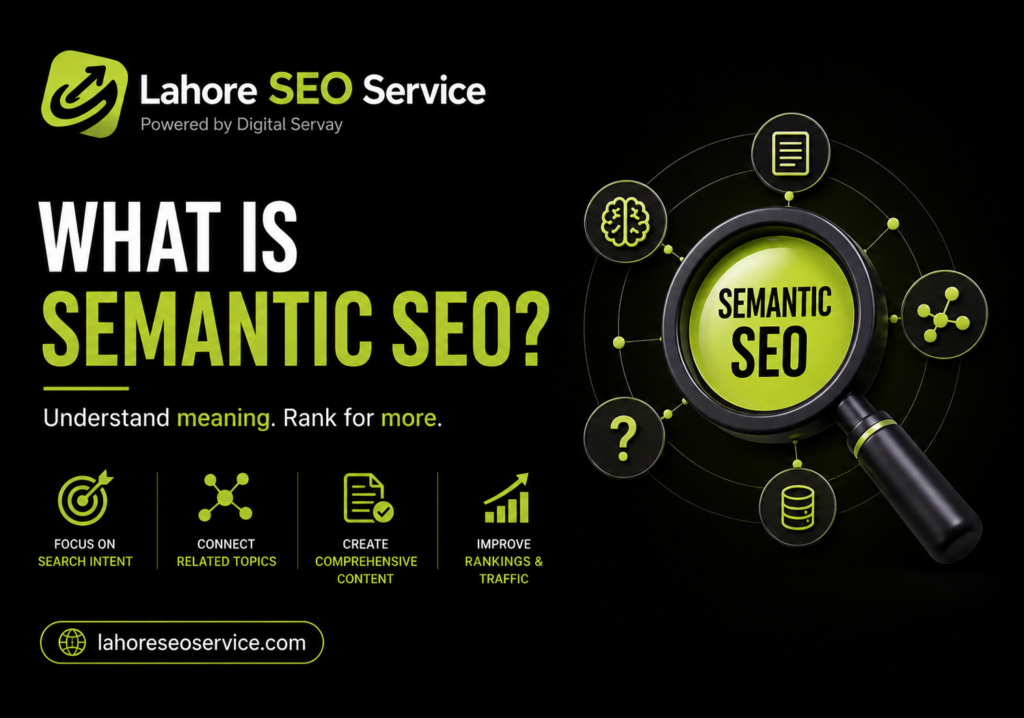
Semantic SEO is the process of optimizing content based on the meaning behind search queries rather than focusing only on exact keywords.
It helps search engines understand:
- The topic of your content
- The relationship between keywords
- User search intent
- Related entities and concepts
- The overall context of your page
For example, if someone searches for:
“best laptops for graphic design”
Google understands that related terms may include:
- RAM requirements
- GPU performance
- Adobe software compatibility
- Screen resolution
- MacBook vs Windows laptops
Instead of only matching the exact phrase, Google analyzes the complete topic.
That is semantic SEO in action.
Why Semantic SEO Matters in Modern SEO
Google has become more advanced due to artificial intelligence and machine learning systems.
Major algorithm improvements include:
Google RankBrain
Helps Google understand unfamiliar search queries.
Google BERT
Understands natural language processing and search intent.
Helpful Content Update
Rewards content that genuinely helps users.
Google Knowledge Graph
Connects entities, topics, and concepts.
Because of these updates, websites that only focus on keyword repetition often struggle to rank.
Semantic SEO helps businesses stay competitive by creating deeper, more useful content.
Traditional SEO vs Semantic SEO
| Traditional SEO | Semantic SEO |
|---|---|
| Focuses on exact keywords | Focuses on meaning |
| Keyword repetition | Topic relevance |
| Targets one keyword | Targets multiple related keywords |
| Thin content | Comprehensive content |
| Lower user engagement | Better user satisfaction |
Traditional SEO still matters, but semantic SEO takes optimization to another level.
How Google Understands Semantic Search
Google now evaluates:
Search Intent
Why the user searched for something.
Types of intent include:
- Informational
- Commercial
- Transactional
- Navigational
Context
Google looks at surrounding words to understand meaning.
Example:
“Apple”
Could mean:
- Apple Inc.
- Fruit
- Apple products
Context determines which result Google shows.
Entities
Google identifies important people, places, brands, and concepts.
Example:
For SEO-related content, entities may include:
- Ahrefs
- SEMrush
- Search Console
Topic Relationships
Google understands related concepts connected to your main keyword.
Key Components of Semantic SEO
Keyword Clustering
Instead of targeting one keyword:
“digital marketing agency”
You also target:
- SEO services
- PPC marketing
- social media marketing
- online branding
Related Keywords (LSI Terms)
These are semantically connected phrases that improve content relevance.
Example for “what is semantic SEO”:
- semantic search
- topical authority
- search intent
- content optimization
Comprehensive Content
Your article should answer every major question related to the topic.
Internal Linking
Link related pages together to strengthen topical authority.
Structured Content
Use:
- H2 headings
- H3 headings
- Bullet points
- Tables
- FAQs
This improves readability and search understanding.
Benefits of Semantic SEO
Rank for More Keywords
One article can rank for dozens of related search terms.
Better User Experience
Users find complete answers faster.
Higher Organic Traffic
More keyword visibility means more traffic opportunities.
Improved Featured Snippet Opportunities
Google prefers clear and structured answers.
Stronger Topical Authority
Your website becomes more trustworthy in your niche.
Example of Semantic SEO
Let’s say your target keyword is:
“best running shoes”
A traditional article might only repeat:
“best running shoes”
A semantic SEO article would include:
- shoes for flat feet
- marathon running shoes
- lightweight running shoes
- Nike vs Adidas comparison
- injury prevention tips
This creates broader relevance.
How to Implement Semantic SEO
1. Research Search Intent
Analyze top-ranking pages.
2. Use Google Related Searches
Find semantic keywords.
3. Create Topic Clusters
Build pillar content with supporting blogs.
4. Optimize for Questions
Target “People Also Ask” questions.
5. Use Schema Markup
Help search engines understand your content.
6. Improve Internal Linking
Connect related content naturally.
Tools for Semantic SEO
Popular tools include:
- Google Search Console
- Ahrefs
- SEMrush
- Surfer SEO
- Frase
- Google Trends
Common Semantic SEO Mistakes
Avoid:
- Keyword stuffing
- Thin content
- Ignoring user intent
- Overusing AI-generated low-quality content
- Poor content structure
Semantic SEO and AI Search
AI-driven search engines like Google SGE and ChatGPT rely heavily on semantic understanding.
This means websites that use semantic SEO will have better chances of appearing in AI-generated answers.
This also supports AIO (AI Optimization).
Future of Semantic SEO
The future of SEO is moving toward:
- Voice search
- AI search engines
- Personalized search results
- Intent-driven ranking systems
Businesses that adapt early will have a strong advantage.
Frequently Asked Questions
What is semantic SEO in simple terms?
It means optimizing content for meaning instead of only exact keywords.
Is semantic SEO important in 2026?
Yes, it is critical because Google understands context better than ever.
Does semantic SEO replace traditional SEO?
No, it improves traditional SEO strategies.
Can semantic SEO improve rankings?
Yes, it helps pages rank for multiple related keywords.
Is semantic SEO good for blogs?
Yes, especially for informational content.
Conclusion
Understanding what is semantic SEO is essential for modern digital marketing success. Google now rewards websites that create useful, in-depth, and contextually relevant content.
Instead of chasing exact keywords, focus on creating topic-rich content that satisfies user intent. This approach helps you rank higher, gain more traffic, and build long-term authority.
Semantic SEO is no longer optional—it is the future of search optimization.